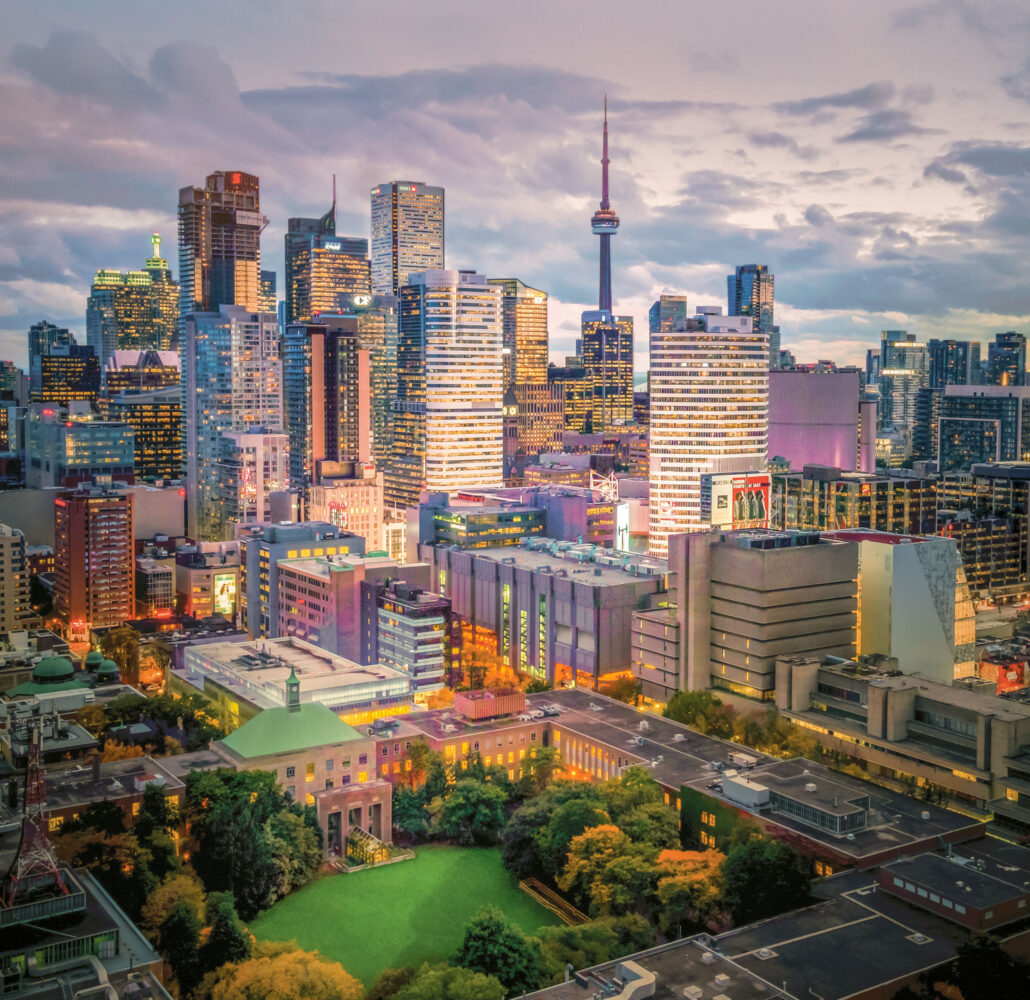
Aerial view of downtown Toronto at dusk, with the TMU campus and surrounding city buildings visible.
A wave of projects is reshaping TMU's campus, services and place in the city.

TMU’s changing skyline

New construction projects are expanding the university's footprint and its role in the community

By Surbhi Bir

Aerial view of downtown Toronto at dusk, with the TMU campus and surrounding city buildings visible.
A wave of projects is reshaping TMU's campus, services and place in the city.

On a typical weekday morning, thousands of commuters pour out of the subway at Yonge and Dundas. For decades, they heard "Dundas Station." Today, they hear TMU.

It's a small change that points to something much larger. Across the downtown core and beyond, Toronto Metropolitan University is in the middle of the most significant expansion in its history—building upward, outward and inward, reshaping not only what its campus looks like, but what it can offer the students, researchers and communities it serves.

Within the next few years: a 21-storey residence tower will more than double on-campus housing. A new medical school is taking root in Brampton. The Lincoln Alexander School of Law is getting a permanent home. A landmark student wellbeing centre is under construction. And Canada's largest transit system now carries the university's name at TMU Station.

Together, these projects signal the kind of institution TMU is becoming—ambitious, connected and deeply woven into the fabric of the city it calls home.

A campus growing with the city

Life in downtown Toronto has long been part of the campus experience. TMU's buildings sit among office towers, retail corridors and residential streets. Students cross busy intersections on their way to lectures. But the scale and pace of development underway now signals a new phase, one in which the university's identity is becoming inseparable from the city around it.

"This moment is about positioning the university for the next generation," says TMU President Mohamed Lachemi. "We are investing in spaces that reflect who we are today—an urban, innovative institution focused on access, community impact and student success. These projects are not just about buildings; they're about creating the environment our students need to thrive."

The transformation is unfolding simultaneously in multiple directions: vertically in the downtown core; outward into neighbouring regions; and deeper into student services.
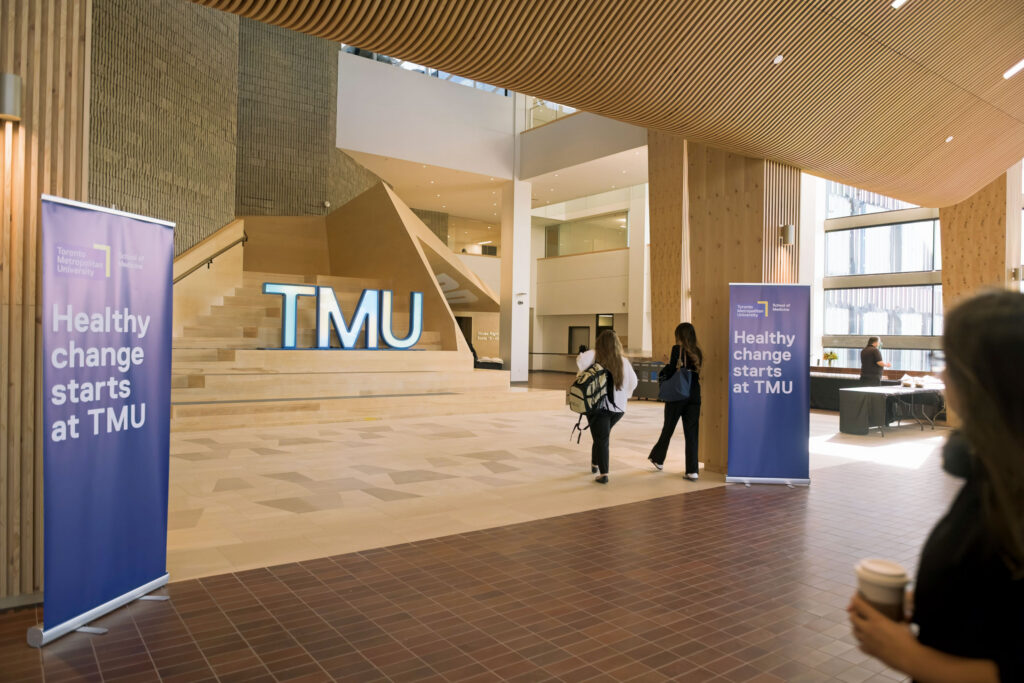
A bright TMU lobby with large illuminated letters on a staircase and banners reading "Healthy change starts at TMU."

The TMU School of Medicine was designed by Canadian architecture firm Diamond Schmitt, working in collaboration with the Indigenous-owned design firm Two Row Architect. Photo: Alyssa K Faoro
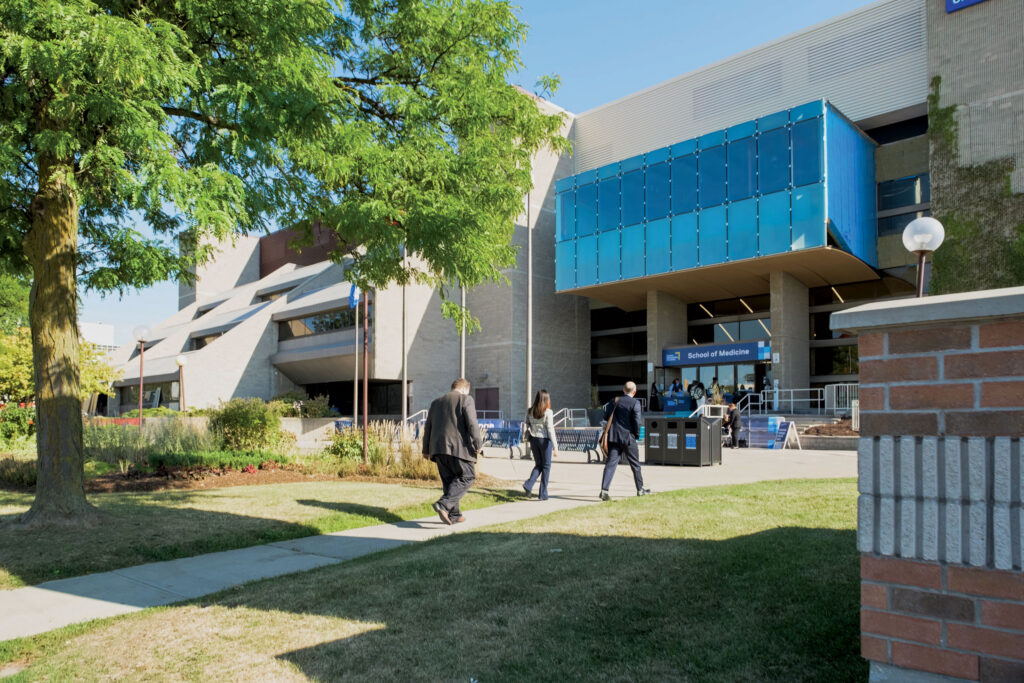
People walk toward the entrance of a TMU School of Medicine building with a bright blue exterior feature.

TMU’s Brampton campus is training physicians where they’re needed most—in one of Ontario’s most underserved regions. Photo: Alyssa K Faoro
Expanding into Brampton

With strong ties already in the Brampton community through initiatives like the Rogers Cybersecure Catalyst and the Brampton Venture Zone, TMU's new school of medicine marks the university's first major academic footprint outside Toronto.

It was built to address a specific and urgent gap: Ontario faces a worsening shortage of family doctors and primary care providers, particularly in fast-growing GTA communities. The Brampton program was designed with that reality front and centre.

Rather than following a traditional model of clinical training concentrated in large hospital settings, the school grounds students in the communities they will one day serve—local clinics, outreach programs and primary care environments that reflect the diversity of Brampton's rapidly growing population.

"As universities evolve, so does their responsibility to the communities they serve," says Lachemi. "We are working with communities that need physicians and building a model of medical education that focuses on primary care, prevention and service."

When the school welcomed its first cohort, it represented more than the launch of a new program. It was a signal that TMU's sense of mission—and its geography—had meaningfully expanded.

Creating an outstanding and inspirational learning environment has truly been a community undertaking, supported by private donors like the Dhillon, Gupta and Kassam families (among many others) to corporate leaders like 407 ETR and Orlando Corporation, to officials at the City of Brampton, the Province of Ontario and the Government of Canada.

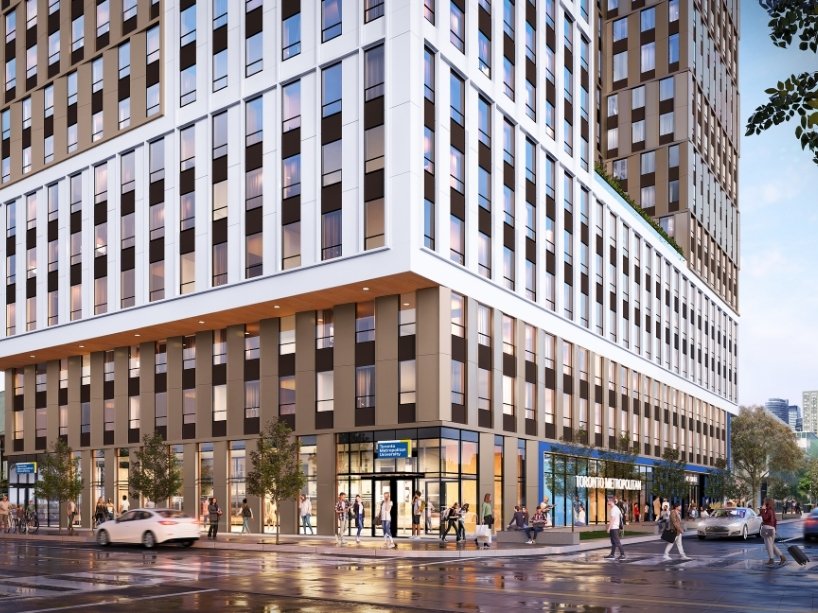
A rendering of a student housing building in Toronto.

Toronto Metropolitan University (TMU) has partnered with Cedar Podium (CP) and Building Ontario Fund (BOF) on a new student residence that will double student housing. Photo: Cedar Podium

Solving the student housing crunch

While TMU stretches outward in the Peel Region, it is also building upward in the City of Toronto. The numbers tell the story plainly: TMU currently has approximately 1,144 beds across three residence buildings for a student body of close to 48,000. Fewer than three per cent of students can live on campus, leaving the majority to navigate one of the most expensive and competitive rental markets in the country.

Developed in partnership with Cedar Podium, the Bond Street Residence is TMU's most direct response to that pressure. When the 21-storey tower opens in 2030, it will add more than 1,370 beds, more than doubling the university's current capacity. The project is backed by $83 million in provincial financing through the Building Ontario Fund, the first student housing project to receive such investments.

"In a city where housing affordability is a real challenge, expanding our residence capacity is about more than adding beds," says Saeed Zolfaghari, TMU's vice-president of administration and operations. "Living on campus supports student success by fostering community, belonging and access to academic and personal support—all especially important in a dense urban environment."

The building has also been designed with a clear understanding of who TMU students are. Because the majority commute, the residence offers flexible nine- or 12-month lease terms—a departure from the eight-month-only model at TMU's existing residences. Most units will be self-contained, three-bedroom suites with eat-in kitchens, giving students the option to cook independently as well. Two classrooms on the lower level will extend the building's role beyond housing, creating additional space for academic life on a campus that is constantly pressed for room.

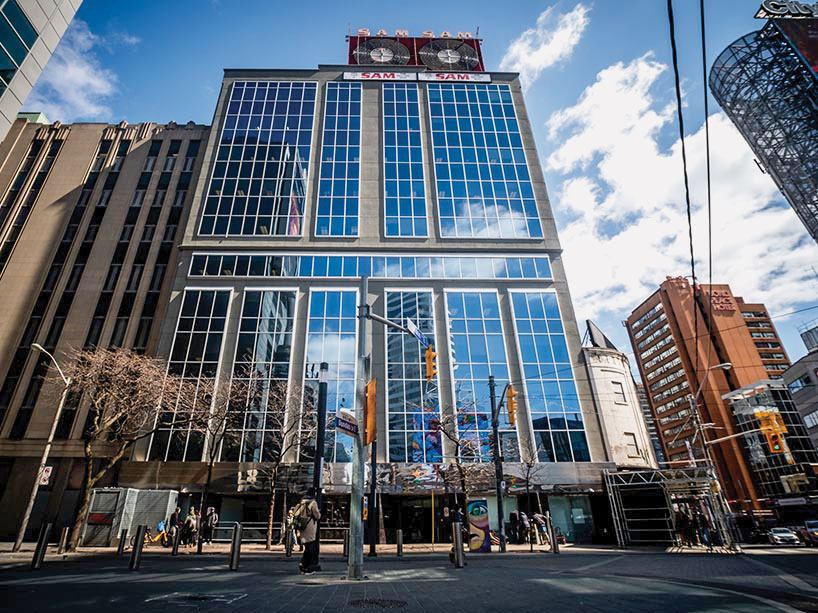
Street-level view of a tall glass-fronted TMU building in downtown Toronto.

After five years in temporary space, the Lincoln Alexander School of Law is getting a permanent home to match its ambitions. Photo: Jae Yang

A permanent home for the law school

The Lincoln Alexander School of Law launched in 2020 with a clear mandate: expand access to legal education and train lawyers committed to social justice, technology and entrepreneurship. It quickly became one of the most sought-after law schools in the country—while still operating out of temporary space.

That's about to change. A purpose-built facility at 277 Victoria Street, directly adjacent to Sankofa Square, will give the school 115,000 square feet across 11 storeys: dedicated classrooms, a moot court, a law library and space for its community legal clinics. A school that launched without a permanent home will soon have one that announces its presence on one of Toronto's busiest corners.

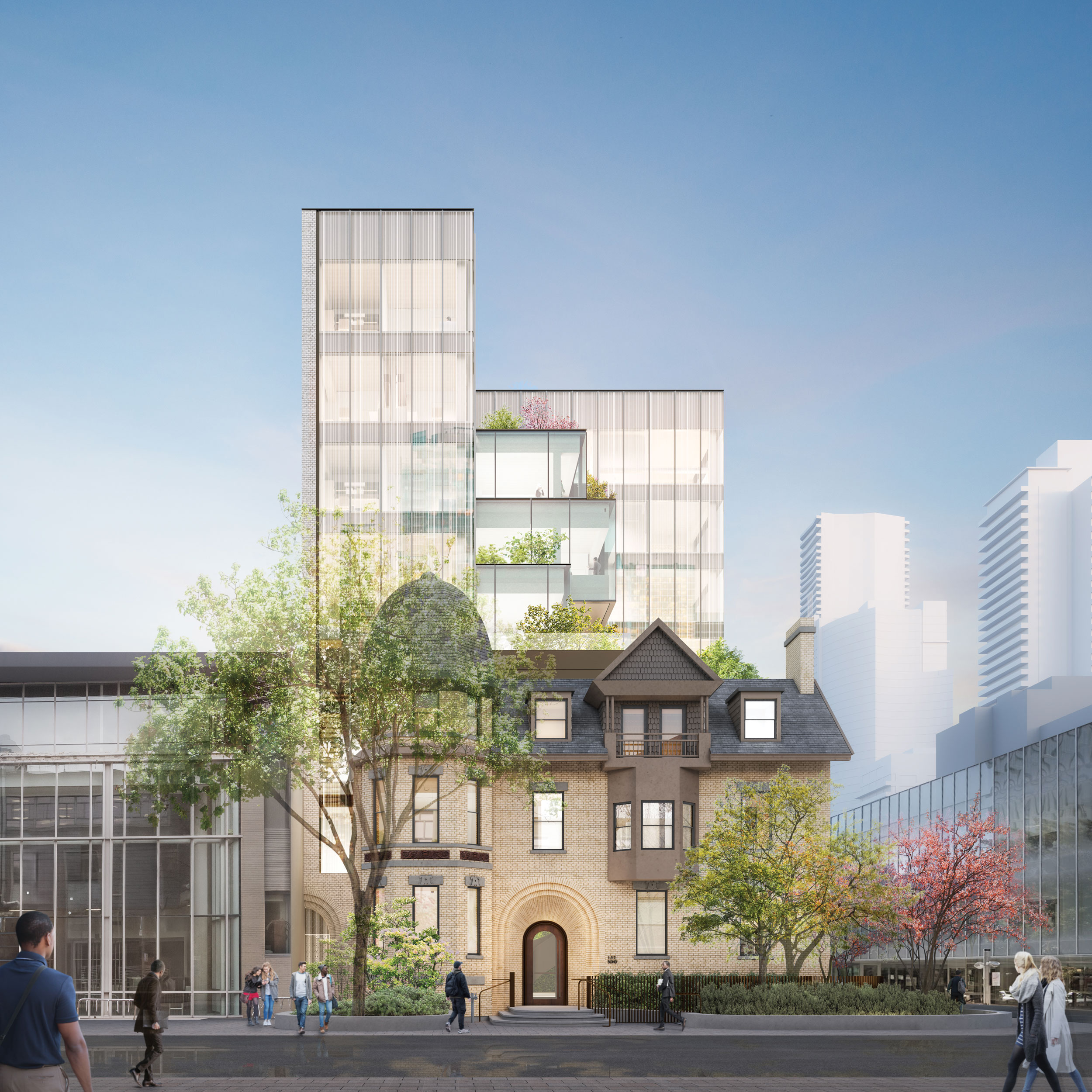
Architectural rendering of a new glass building rising behind a preserved historic house facade, with pedestrians on the street below.

Counselling, medical care and academic support—all under one roof, designed to feel restorative, not clinical at the Nadir Mohamed Centre for Student Wellbeing.

Putting well-being under one roof

Finding support at TMU has historically meant navigating services scattered across multiple buildings—counselling here, medical care there, academic accommodation somewhere else. The Nadir Mohamed Centre for Student Wellbeing changes that.

Opening in 2027 at the historic O'Keefe House on Bond Street, the centre will bring counselling, health promotion, medical care, academic accommodation support and more into a single building. The logic is simple: the easier support is to find, the more likely students are to use it.

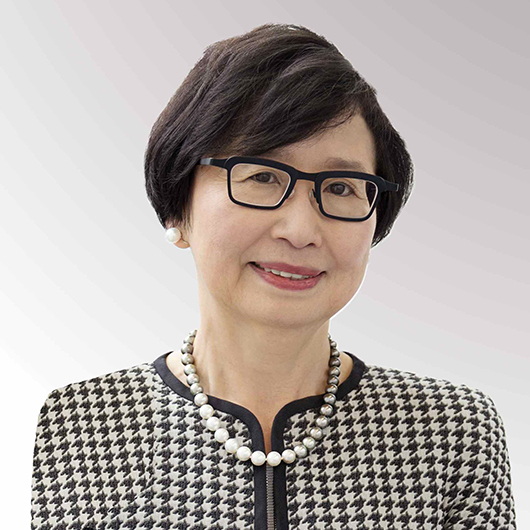
The project is notably student-driven. In 2022, nearly 60 per cent of TMU students voted in a referendum to help fund it—a rare instance of a university community actively choosing to invest in something it collectively needed. Philanthropic support followed, including contributions from Chancellor Donette Chin-Loy Chang, Richard Rooney of Burgundy Asset Management and former TD Bank CEO Ed Clark.

"Students today are navigating enormous academic, social and personal pressures," says Chin-Loy Chang. "Together with our students, we have invested in a safe and supportive space where health, counselling and wellness services are accessible in one place. When students are well, they are able to fully unleash their brilliance."

Designed by Hariri Pontarini Architects, the eight-storey mass timber tower wraps around the preserved 1875 heritage building. A double-height green atrium draws natural light deep into the space—deliberately warm and non-clinical in a setting where that distinction matters.

TMU Station: a university on the map

Perhaps the most visible sign of TMU's growing presence arrived underground.

In late 2025, the subway stop long known as Dundas Station was officially renamed TMU Station—a recognition of the university's significance to this corner of the city. Every day, tens of thousands of people now see the university's name as they move through one of the busiest transit corridors in the country.

The renaming is more than symbolic. It followed a substantive partnership between TMU, the TTC and the DMZ through the Transit Innovation Yard—a joint initiative that brings TMU researchers and startups to bear on some of the system's most persistent operational challenges, from route optimization to real-time service improvements. The name on the platform reflects work being done beneath the surface.

For a university where more than 80 per cent of students, faculty and staff arrive by transit each day, having the system itself carry the institution's name is a fitting kind of recognition: TMU is not just located in the city. It is part of how the city moves.

The university's place in the city

Taken individually, each of these projects addresses a distinct and pressing need—more housing, better access to health services, a home for a law school, a new model for medical education and a civic partnership built on research. Taken together, they describe a university that is deliberately reshaping its relationship with the city around it.

"Universities are anchor institutions," says Lachemi. "Our responsibility is not only to educate students, but also to contribute to the well-being and growth of the communities we serve. What we are building now is not just infrastructure. It is the foundation for the next chapter of TMU."

Related stories:

Surbhi Bir
Surbhi Bir is a freelance writer for Toronto Metropolitan University.

Love the digital mag?

Sign up now. Don’t miss an issue of Toronto Met University Magazine.