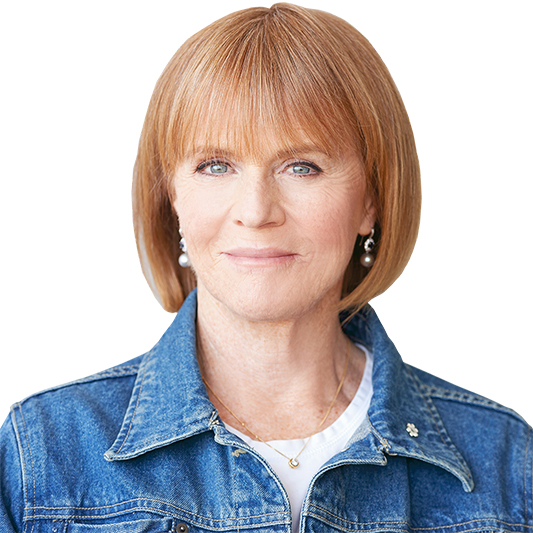
When Catherine Paisley (BComm ’90) first arrived on TMU’s campus as a student, she had no idea she would one day become head of the Board table.
Paisley is the first TMU graduate to serve as chair of the university's Board of Governors. She first joined the board in 2016 as an alumni representative, which gives her a unique perspective. She's experienced TMU as a student, a graduate, a staff member, a parent of a TMU alum and a leader in public science engagement.
That range of connections to the university informs how she approaches governance, strategy and, above all, the student experience.
In the Q&A below, hear what the position means to her, how her various roles at the university shape her approach, what she sees in the future for TMU and more.
You are the first alumni chair of the Board of Governors. What does this milestone mean for you and TMU?
It’s an incredible honour. To me, it reflects TMU’s enduring commitment to students.
From my earliest days on the Board, it was clear that students were the number one priority. Every decision we take has students at the centre. Being on the Board gives me a front-row seat to witness that commitment: policy decisions, budget priorities – everything comes back to what’s best for students.
Having an alumni chair feels like a natural extension of that. It acknowledges the full student lifecycle, from student to graduate and alum.
Even though I’m the first alumni chair, I’m confident I won’t be the last. It’s also meaningful to serve alongside others who share that alumni spirit, such as Donette Chin-Loy Chang – the first alumni chancellor. Together, we represent the growing strength and engagement of the alumni community.
How does being an alum shape your perspective on the future of TMU and your approach to governance?
One of the strengths of the Board is its diversity: many deeply dedicated individuals bring their own expertise. But having been a student at TMU and seeing firsthand how the campus has changed over time gives me a particular vantage point.
I’m also the parent of a TMU graduate, which gives me a layered view of the student journey. I’ve stayed connected over the years through activities such as alumni events, and eventually realized that joining the Board was a way to formalize that connection and help give back.
As a Board member, I appreciate the respect TMU shows for governors. It makes governance feel less like a formality and more like genuine engagement.
How does your science engagement work shape your view of higher education's role in STEM equity?
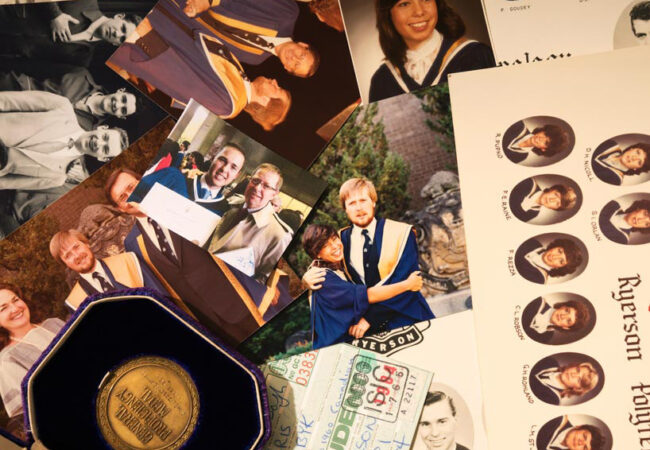
I started my career at TMU. After graduating, I worked in the Registrar’s Office and the Office of Continuing Education for about a decade. I also completed a second degree in higher education because I was deeply interested in how education systems work.
Shortly after I started at the Ontario Science Centre, we created a new exhibition hall called KidSpark, designed to engage young children and families in science. We reached out to TMU’s Early Learning program. As part of their program, students from TMU worked directly on the Science Centre floor, learning to communicate science to young kids and their parents.
We’ve also collaborated with SciZone and SciXchange over the years. Like us, TMU’s faculty members have long championed science communication – not just teaching science but conveying what it means, why it matters and how it touches everyday life.
More broadly, higher education and informal science engagement share a philosophy: learning doesn’t happen in isolation. Collaboration, experiential learning and community engagement are essential.
Looking ahead, what are the biggest opportunities and challenges for TMU?
The higher education sector is facing real pressures: shifting government funding, evolving policies and the need to remain resilient. But I believe those pressures also present opportunities – to innovate, to reimagine how we serve students and society and to deepen relationships with government as partners rather than obstacles.
Right now, one of the biggest opportunities is the search for a new president, a process I’m leading with a strong committee. TMU has been shaped by outstanding leaders in the past and when the new president arrives, they will inherit a university in a position of strength. The next leader will help define what city building means in the coming years, and guide growth in areas like law and medicine and beyond.
It’s an exciting moment for TMU.
Fast facts
Three words to describe TMU: Innovative. Resilient. Strong.
If you weren’t in science engagement, what career would you choose? Higher education – a sector I deeply enjoy.
A book you recommend: A Prayer for Owen Meany by John Irving, Scarborough by Catherine Hernandez, The Lost Highway by David Adams Richards. Books by Canadian authors are always worth a read.
Favourite spots on campus: The quad in spring; and Lake Devo because it remains a quiet, unchanged spot amid a growing city campus.
A message for graduating students: Be kind to yourselves and have fun. Stay connected; the university is a community. You may need it, and it may need you.