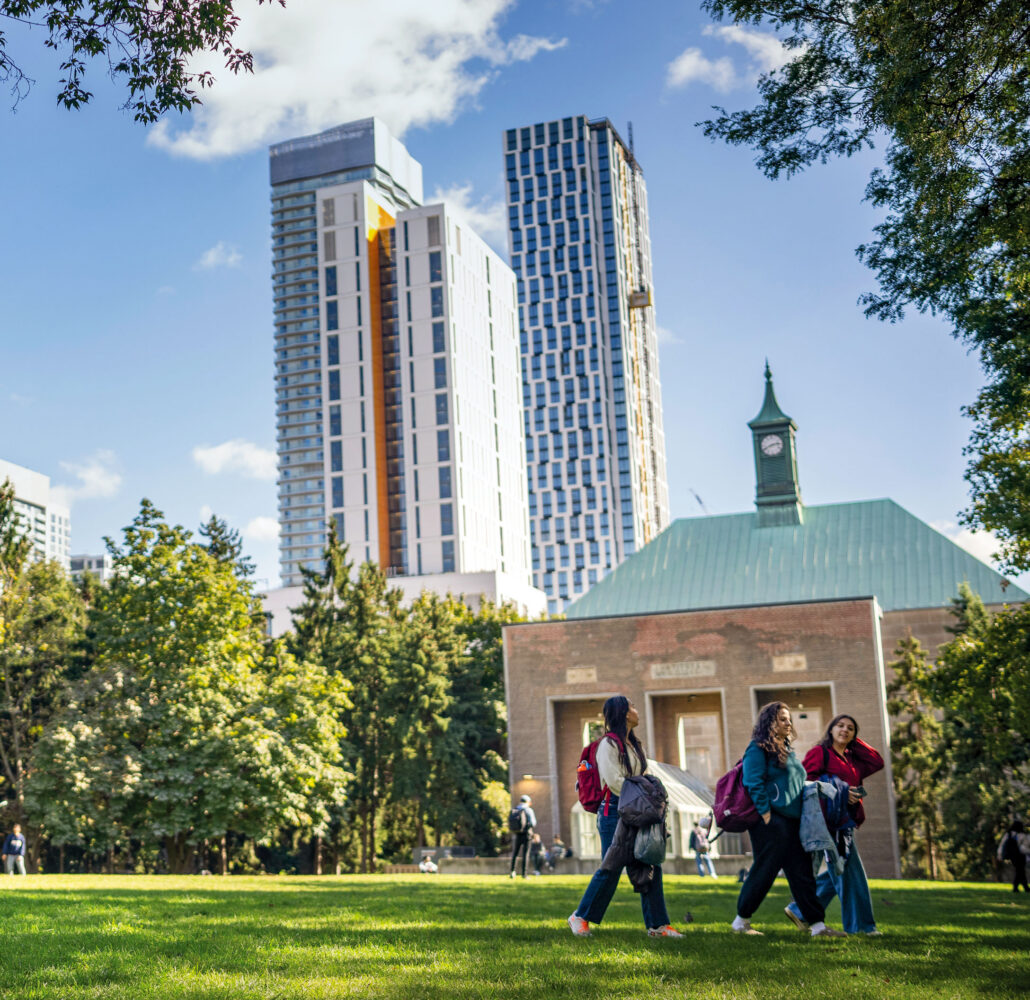
Students walk across a sunny campus green, with a historic clock-tower building and modern high-rises behind them.
Mohamed Lachemi's tenure leaves TMU transformed by growth, inclusion and bold ambition.

Community

A university for everyone: Mohamed Lachemi’s legacy

After nearly 30 years, TMU’s outgoing president leaves behind a transformed campus built on opportunity

By Wendy McCann

Students walk across a sunny campus green, with a historic clock-tower building and modern high-rises behind them.
Mohamed Lachemi's tenure leaves TMU transformed by growth, inclusion and bold ambition.

To understand Mohamed Lachemi’s lifelong dedication to building a university for everyone is to recognize how unlikely an education seemed for him as a young boy.

Born in a remote Algerian village to parents with no formal schooling, the path to higher education felt impossibly distant. Everything changed with a scholarship to study engineering in Algeria—and another that carried him to Canada.

Those opportunities didn’t just alter his trajectory but defined his purpose.

“It was almost impossible for me to be where I am today based on my own story,” Lachemi explains. “My whole educational journey was about access made possible by others. They believed in me and, therefore, it’s important to me to make it easier for the next generation.”

His drive to create what he calls a “university for people” became the engine that fuelled a career dedicated to possibility.

It’s rooted in a conviction that education can transform lives, that universities can expand who gets to belong and that those who are given opportunity can, in turn, reshape the world.

Now, at 63, as he transitions out of the presidency, Lachemi has built a stronger, more influential university that has expanded its reach and impact within Canada’s largest city and beyond. Under his leadership, TMU established landmark programs including new law and medical schools, solidifying its position as a leading force in higher education—an institution that solves the world’s challenges, while staying true to its mission of access.

TMU is a university for people who, like Lachemi, are the first in their family to attend. For newcomers whose families risked everything to give their kids an education. For students who could not afford university without financial help. For equity-deserving communities looking for a place they can belong. It’s a place for everyone who sees education as a catalyst for making a difference.

Lachemi leaves a legacy of opened doors for generations of students who will continue to see themselves in the promise he fought to make possible. TMU is a place for learning and opportunity for students who reflect back the diversity on which the Greater Toronto Area was built.

“He believes that talent is everywhere, but that opportunity isn’t evenly distributed,” says Roberta Iannacito-Provenzano, TMU’s current provost and vice-president, academic, and president-designate. “But inclusivity is never framed as lowering standards. It’s about removing barriers and structures so that excellence can surface. This is part of his philosophy: you need to give people a chance so that they can make positive change.”

Thinking — and acting — big

Iannacito-Provenzano says Lachemi is one of Canada's big thinkers of his time. In her view, he understood early that an educated workforce would move his adopted city and the country forward, and that expanding access to education was inseparable from that goal.

If he wanted to give more students an opportunity, he'd need to grow the university's physical footprint and broaden who it served.

The initiatives that followed were the practical expression of that conviction. He was working to bring more people to the table long before inclusion came into stronger focus.

The initiatives he championed, the structures he built and the culture he fostered are now woven into the fabric of how TMU operates and how students experience the university.

What he built isn't a conclusion but a foundation. "He repositioned TMU as a confident, open-to-the-world, urban, comprehensive, ambitious and bold university," Iannacito-Provenzano says. "He moved the university from a place of aspiration—'this is what I think we should do'—to execution. He has created an institution that expects to lead. In that, and so many other things, he has really delivered."

Starting on day one

Lachemi's vision for a progressive and inclusive TMU developed as his own career evolved.

Joining as a professor of civil engineering in the late '90s, he was drawn to the institution in part by the chance to build something from the ground up. At that time, the institution didn't have a solid research agenda or graduate students, which he saw as an opportunity to contribute.

"He believes that talent is everywhere, but that opportunity isn't evenly distributed." - Roberta Iannacito-Provenzano
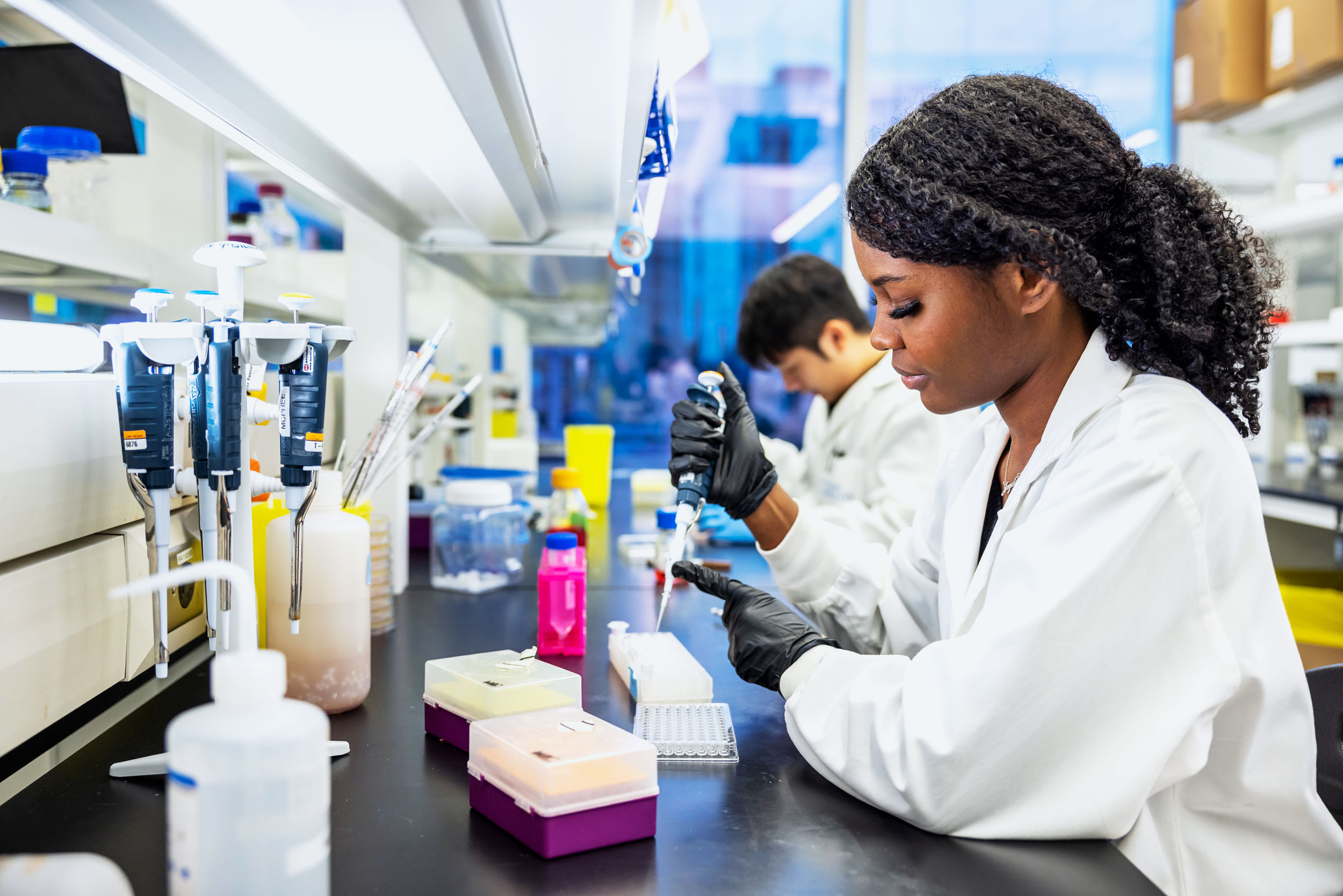
Someone conducting research in a lab.

Building a research culture from the ground up was among Lachemi’s earliest and most enduring ambitions. Photo: Jesse Milns
Over the following two decades, Lachemi progressed through nearly every level of academic leadership—from graduate program director to department chair, associate dean, dean of the Faculty of Engineering and Architectural Science and eventually provost—before becoming president in 2016.

He signalled change immediately, launching a scholarship program on his first day to help students facing obstacles find a place in higher learning.

The President's Awards to Champion Equity (PACE) set a goal of raising $10 million to fund donor-led scholarships for racialized students, 2SLGBTQIA+ students, women in STEM and students with disabilities. The first $100,000 contribution came from his own pocket.

Today, those scholarships open the door to TMU for many students each year, and the fund has since grown to more than $13 million.

"This gracious gift relieved a weight from my shoulders," says Saije Catcheway, who was able to study law and business because of a PACE scholarship. She graduated in 2025 and believes the opportunities that lie ahead of her exist because of his vision.

"I am a first-generation student and it wouldn't have been possible without these scholarships. I'm grateful for being able to continue my education, and pay my living expenses and transportation home," she said.

Building out the university to change the equation

Lachemi would go on to oversee the establishment of new schools in law and medicine, with a focus on equity and inclusion and a mandate to reach underserved populations.

Since it opened in 2020, TMU's Lincoln Alexander School of Law has sought to diversify the profession and also to bring a new approach to the delivery of legal services.

Lachemi fought for the right of applicants to apply for the Ontario Student Assistance Plan (OSAP). He championed access for equity-deserving groups like first-generation learners and racialized groups, newcomers and the 2SLGBTQ+ community.

The law school's focus on experiential learning means graduates can get licensed without articling, moving from the classroom into practice more quickly. Its modernized curriculum is showing students that, by leveraging technology, they can reach more people. And thousands of nonprofits and charities are now benefiting from free or low-cost legal advice each year through clinics led by students and faculty.

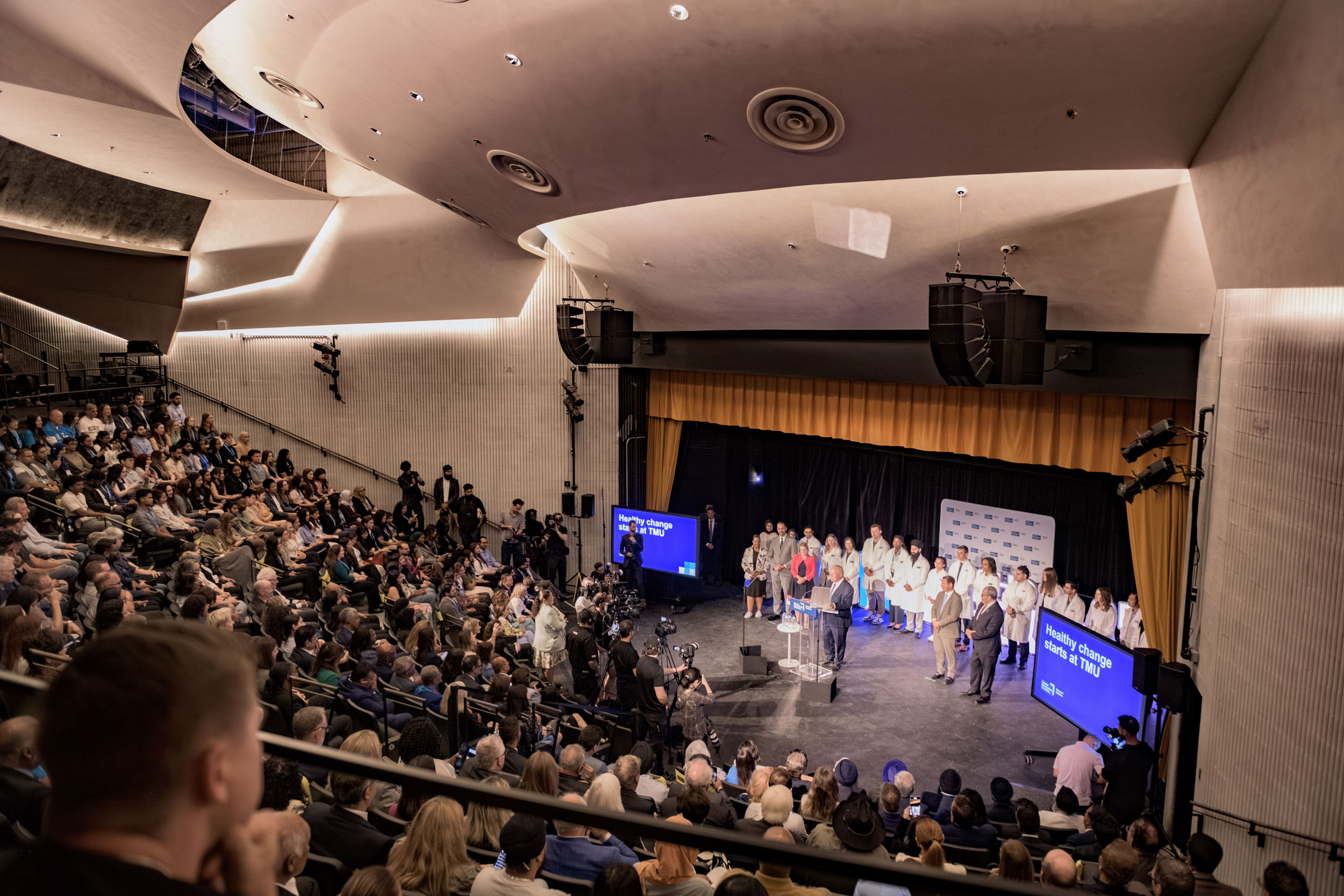
An auditorium full of people at TMU's School of Medicine launch.

TMU’s new medical school was built to address a critical shortage of primary care in fast-growing communities. Photo: Alyssa K Faoro

Power in partnerships

Similarly, Lachemi's partnerships with the provincial government and City of Brampton to establish Ontario's first new medical school in over two decades will fill unmet demand for primary care in Peel Region for decades to come. The TMU School of Medicine's community-centred, team-based approach is bringing more health care to one of the most diverse areas of the country, as well as systemic change to the province's health care system at a time when it is overburdened by an aging population and a shortage of doctors.

Lachemi's investment in TMU's student experience is both institutional and personal. All three of his daughters attended TMU, each in a different faculty. Watching them move through their programs, land internships and go on to build careers in their fields gave him a particular vantage point on what the university's experiential model means in practice.

"President Lachemi's vision of a university for people is very clear from the moment we walk onto campus and it's very intentionally designed into the medical school," said Kenisha Arora, who landed one of 94 coveted seats for the medical school's inaugural year from among 6,415 applicants. "We see, from the admissions process to the curriculum, there's a clear emphasis on access, equity and especially community connection."

"It doesn't feel like the goal was simply to open another medical school but to address real gaps in health care systems, especially for underserved communities," she says. "That alignment between who is trained here and who ultimately benefits reflects a deeper institutional commitment to inclusion, not just as a value statement, but as a structural priority. It's framed as a responsibility. That's where President Lachemi's legacy becomes tangible in our lives every day and will continue to be felt into the future."

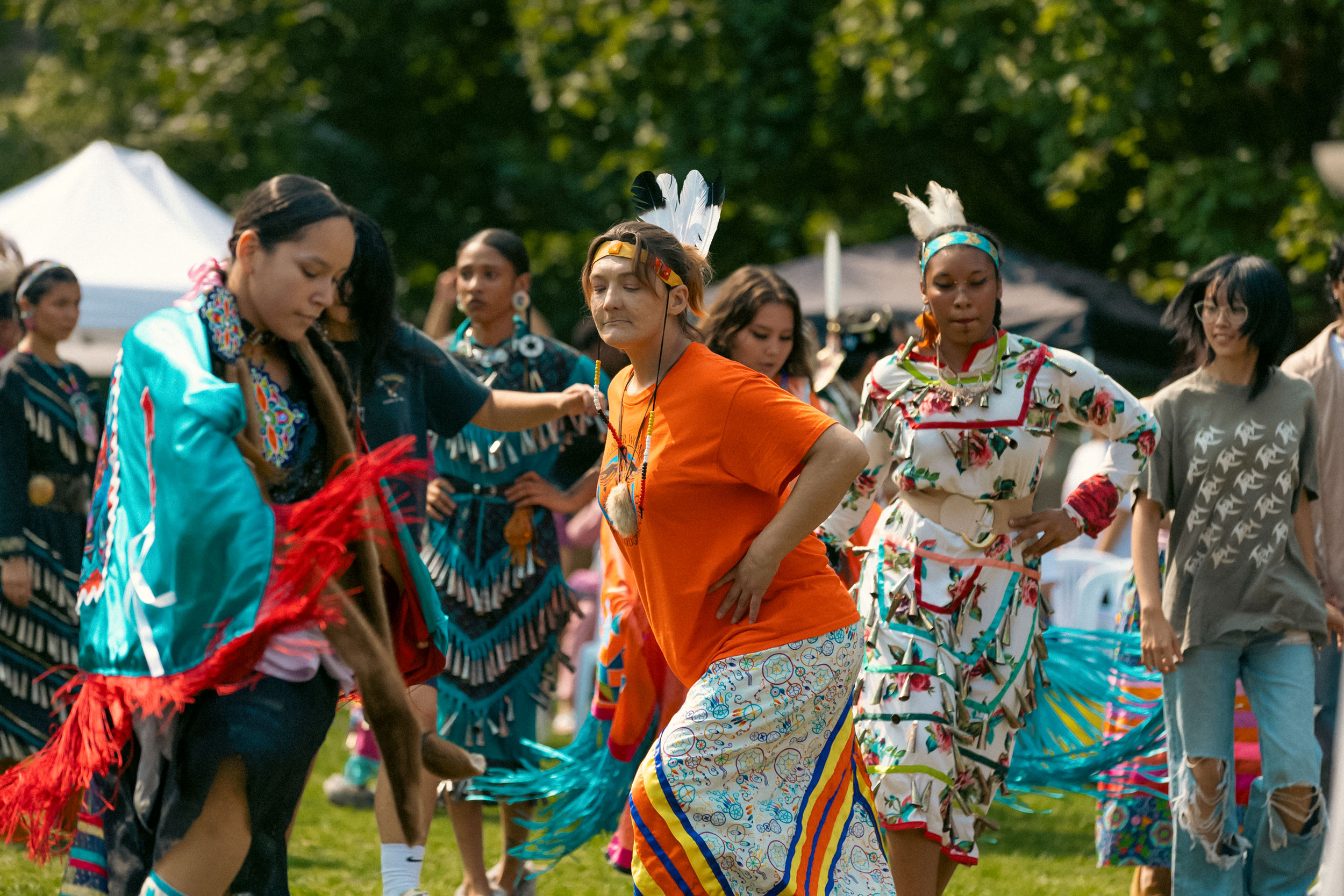
Dancers at a Pow Wow on TMU's campus.

Embedding reconciliation and Indigenous inclusion into the fabric of TMU became a defining commitment of Lachemi’s tenure.

A name and a reckoning

While the medical and law schools sought to address societal need, in changing the very name of the university, Lachemi sought to help take account of a painful chapter in Canadian history.

In 2021, as the world was challenged by the global pandemic, Canada was also grappling with harrowing accounts about residential schools. The discovery of unmarked graves at former residential school sites across the country forced a national reckoning with the full scale of violence and cultural genocide inflicted upon Indigenous Peoples. Under Lachemi's leadership, TMU responded.

The school opened its doors in 1948 as the Ryerson Institute of Technology, named by founder Howard Kerr to connect the institution to both its location on the site of Ontario's first teacher training school and Egerton Ryerson. Well-known for his role as chief superintendent of education for Upper Canada, Egerton Ryerson was celebrated at the time as a prominent contributor to the design of the Canadian public school system. However, starting in the 2000s, concerns over his connections to the residential school system began to surface.

Lachemi responded to calls from the university community and beyond to disassociate its name from Egerton Ryerson by appointing the Standing Strong (Mash Koh Wee Kah Pooh Win) Task Force (SSTF). Its mandate was to review Egerton Ryerson's historical role and develop recommendations to address his legacy. Lachemi recognized that, as president of a university embedded in the heart of Canada's biggest, most diverse city, a thorough and transparent review was necessary to help reconcile the past and reposition the university for the future.

After months of consultations involving thousands of voices, the SSTF put forward 22 recommendations for the university, one of which was renaming the institution. The Board of Governors unanimously approved them all.

Joanne Dallaire, the university's Elder and senior advisor on Indigenous relations and reconciliation, praises Lachemi for having the courage to undertake such a massive—and controversial—move.

"It was monumental for him to contemplate changing the name of the university. He was going to deal with a ton of backlash, but he had the courage to do that because he believed it was the right thing to do," Dallaire says.

"Maybe it's because he's a man who has known sacrifice in his life that allowed him to do that. Also, if you watch him and listen to him talk, you can see that he's a very thoughtful man and very accepting of other people. That's what I believe he drew on to move forward with this enormous decision."

Diversity as strength

Long before inclusion became institutional language, Dallaire says, Lachemi was already acting on it by making space for equity-deserving groups, including Indigenous Peoples. His belief, she says, comes from a long-held conviction that universities do better work when more kinds of people are in the room.

Dallaire points to his willingness to genuinely listen, and to be changed by what he hears, as the quality that has made him an effective builder of partnerships across very different communities.

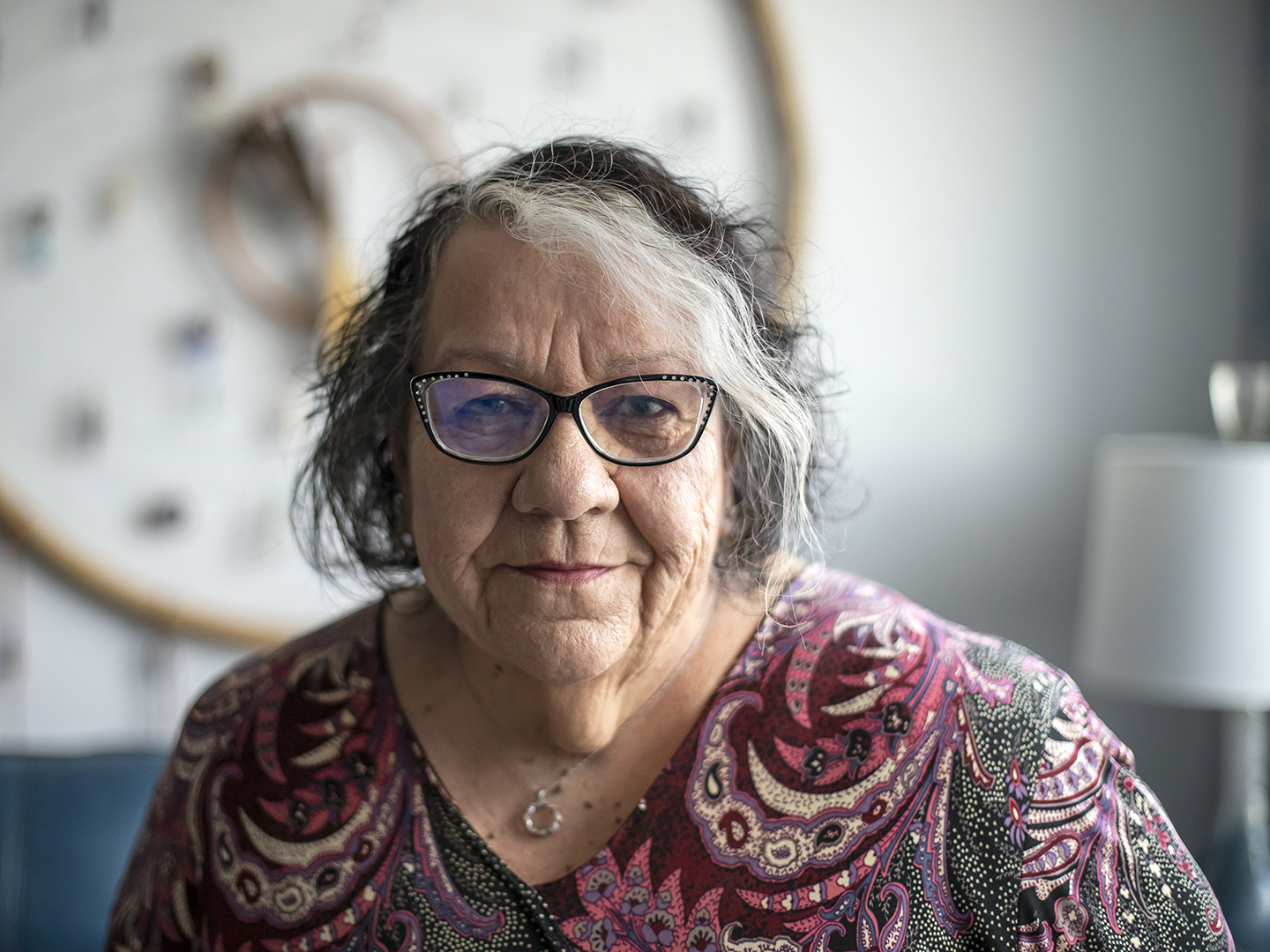
Joanne Dallaire.

Photo of Joanne Dallaire by Alex Jacobs-Blum

"It was monumental for him to contemplate changing the name of the university. He was going to deal with a ton of backlash, but he had the courage to do that because he believed it was the right thing to do." — Joanne Dallaire

Iannacito-Provenzano says Lachemi developed a culture at TMU where partnerships are expected. "That's one of the things he's built into TMU—that community partnerships open up possibilities. He has this passion for bringing the university to the world."

A collaborative leader who knows how to listen, he has a gift for uniting people around ideas that create mutual benefit. People answer his calls because they know the partnerships he proposes will create something that will raise everyone.

Lachemi's colleagues and TMU's students often cite his accessibility as central to his leadership style. Remaining connected to the community he serves has always been inseparable from the work itself.

"He asks the right questions and he values your opinion," says Iannacito-Provenzano. "He's kind and generous with his tone and he cares about people."

An image that stays with her is the time she was walking with him through campus and he stopped to kick the ball with a group of students outside Balzac's. It is the image that best captures his relationship to the place he's spent nearly three decades building.

"Try to picture him in his suit and tie and dress shoes kicking around the ball with students," she says. "That shows you his joy when he walks around this campus, how much he loves our students."

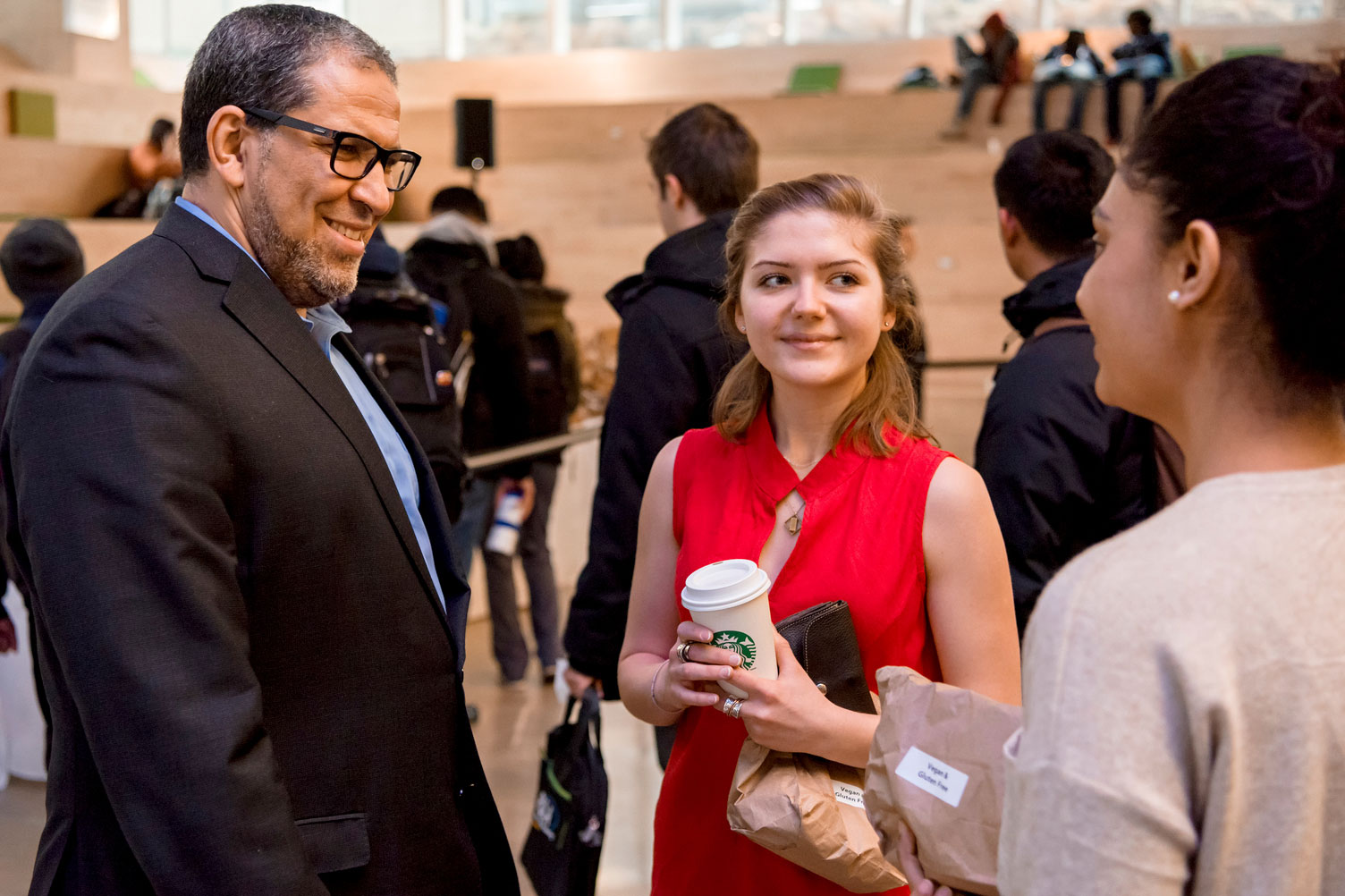
TMU talking to students in the SLC.

For Lachemi, staying connected to the students he serves has always been inseparable from the work itself. Photo: Aurthur Mola

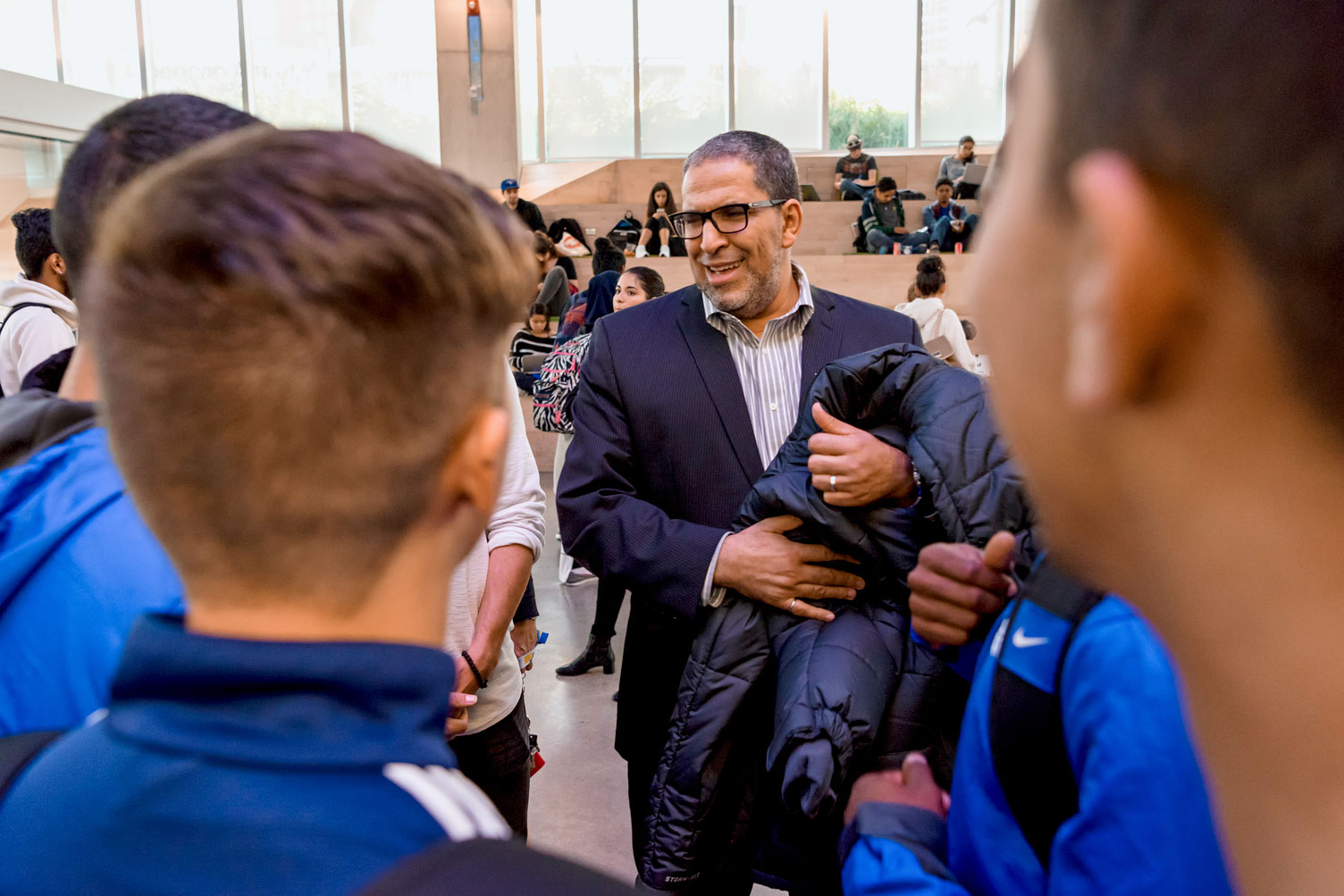
Mohamed Lachemi talking to students in the SLC.

Whether kicking a ball with students or joining campus celebrations, Lachemi’s joy on the grounds he spent nearly three decades building has never been hard to spot. Photo: Aurthur Mola

Lachemi's indelible footprint is all over TMU and his legacy will live on in its people and structures. But in his characteristic humility, Lachemi is reluctant to take credit.

"I love TMU. I hope for TMU to continue to be a university for the people," he says. "We have this definition that our university is for Toronto and the people of Toronto. I hope it will continue this inclusive approach and that we are continuing to help people who don't have the means to be successful and to give back one day."

He is careful to make sure that everyone shares recognition for the caring culture that marks TMU, the community of today and those who came before.

"I've been here 28 years, I grew up here and I feel a sense of belonging to this university, but it's not about me," he says. "I am just one of the contributors. I don't want to pretend I started the caring culture that defines us. I made a contribution and I will continue to contribute as part of the community so that it can be the best place to work, to learn, to teach. That's all."

Wendy McCann.
Wendy McCann is an expert communicator, with 20+ years as an award-winning Journalist at The Canadian Press news service, a member of the inner circle of the Ontario Government and in an executive Communications and Public Affairs role at the Council of Ontario Universities.

Love the digital mag?

Sign up now. Don’t miss an issue of Toronto Met University Magazine.